
AI agent memory: four types and how to store them
AI agent memory is more than a long context window. The four kinds an agent needs, how to store each and what to keep out, with HotKV commands.
Norbert E. Boros founded HotKV Ltd and wrote HotKV from scratch in modern C++. He has more than a decade of commercial experience as a developer, mostly in C and C++, including anti-cheat software and mission-critical systems. On this blog he shares product updates, engineering insights and the benchmarks behind HotKV.

AI agent memory is more than a long context window. The four kinds an agent needs, how to store each and what to keep out, with HotKV commands.

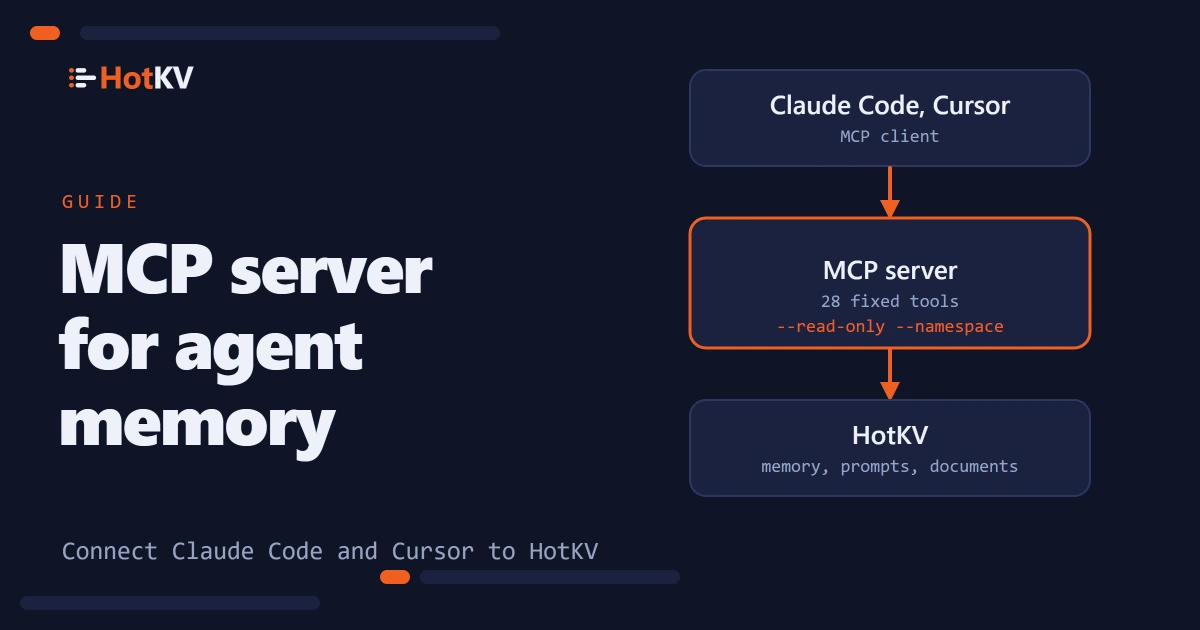
An MCP server gives Claude Code or Cursor memory in HotKV through 28 fixed tools. Install it, connect it and limit it with read-only mode and namespaces.

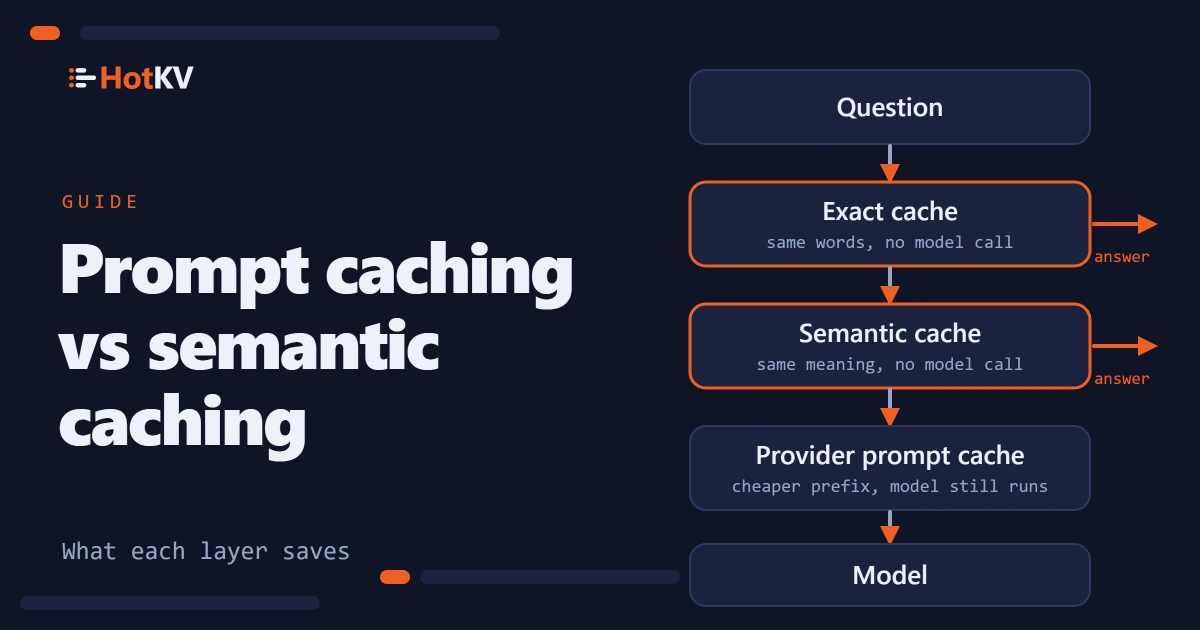
Prompt caching makes a repeated prefix cheaper. Semantic caching removes the model call. How each works, what we measured and which to use when.

HotKV and Redis 8.10.2 vector search on 100,000 and 999,000 embeddings from 1 to 100 clients: throughput, latency, recall, loading speed, memory and limits.

Four Claude models, 3,000 support requests each: HotKV caching cut model calls, tokens and API cost by about 70%. Results and answer-quality trade-offs.

Why I built HotKV, a multithreaded, Redis-compatible data store written from scratch in modern C++, what it offers today and how it did in our benchmark.